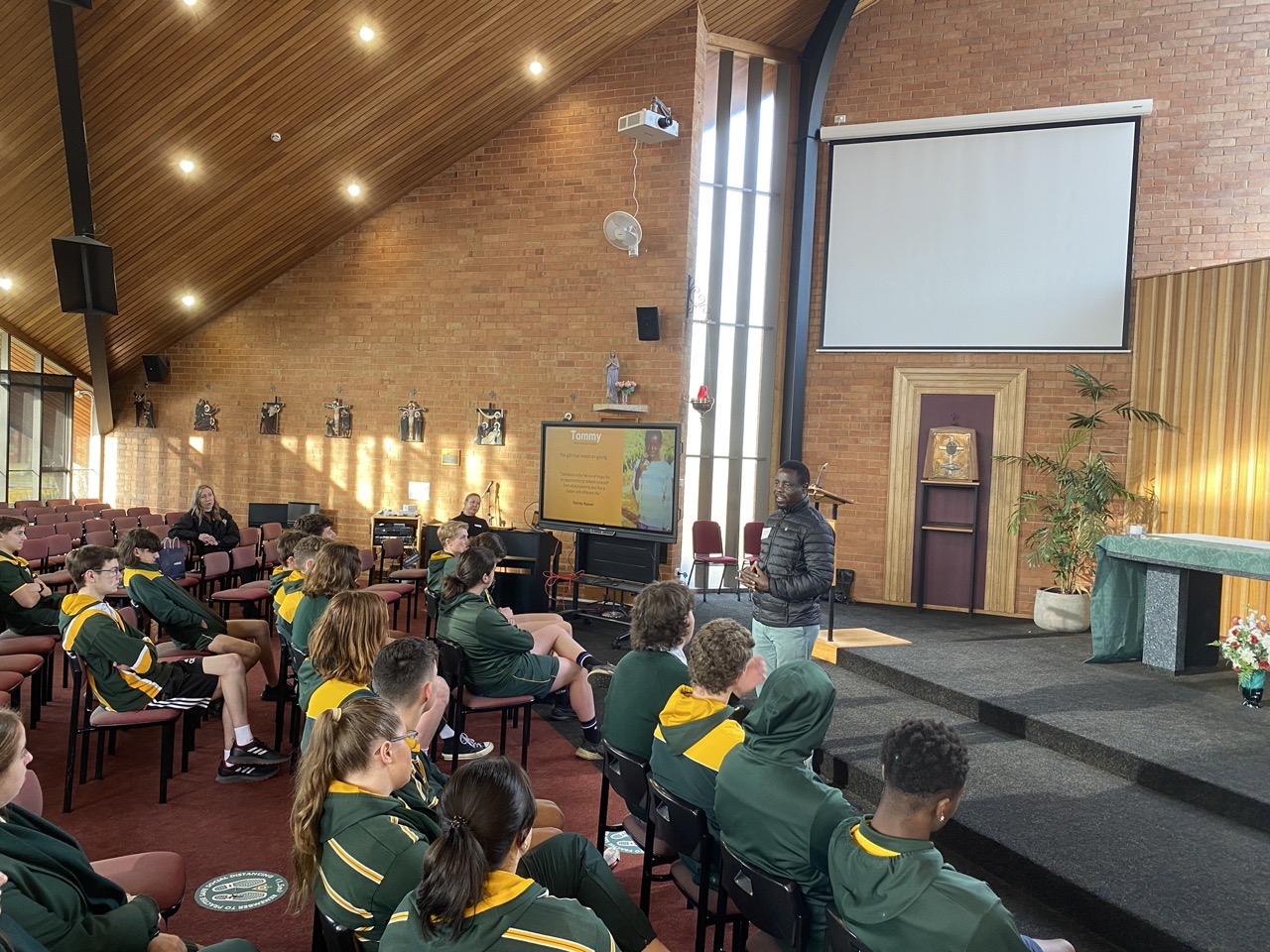
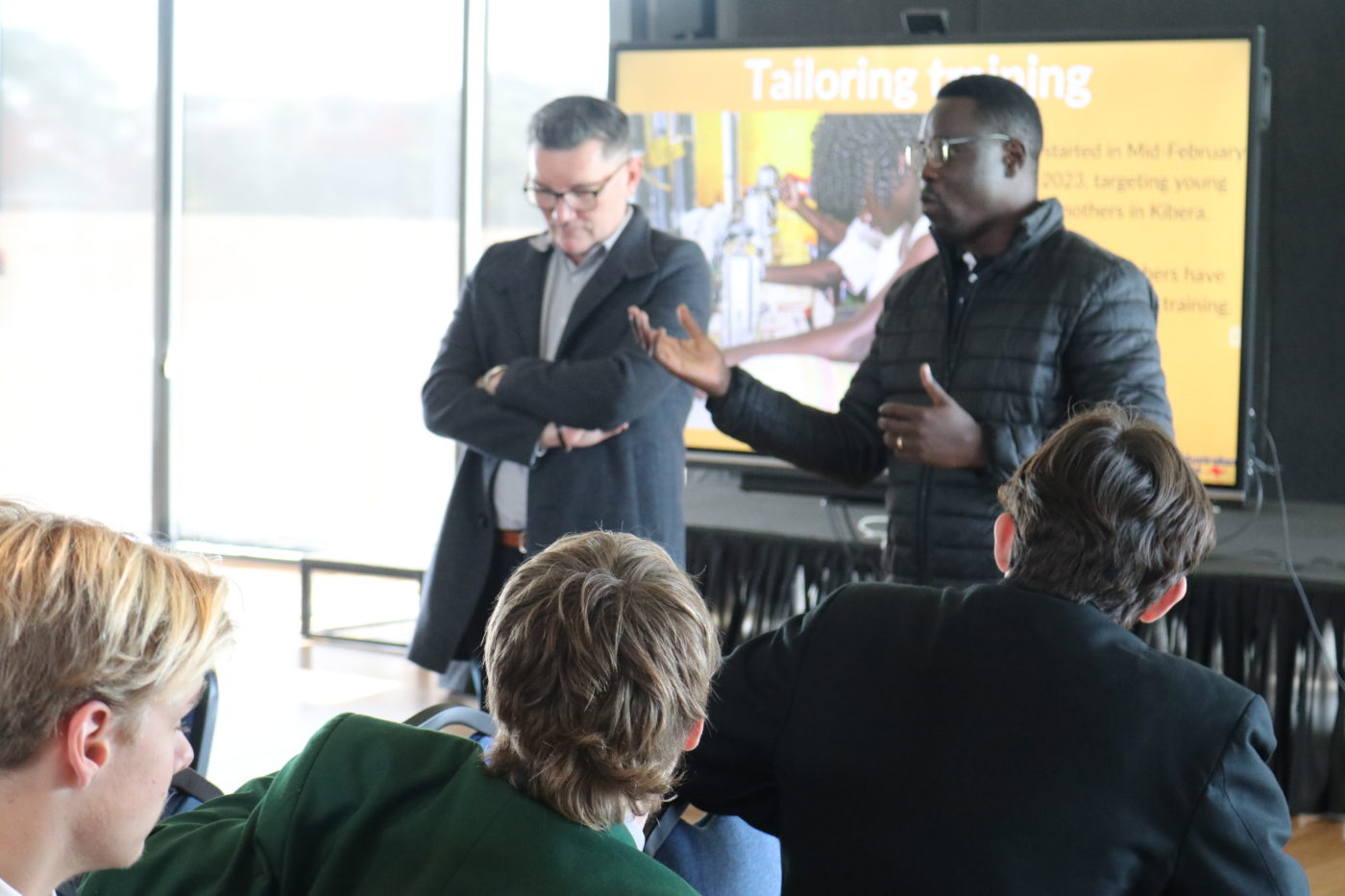
“I was just listening to everything Tommy was saying, and I just think we need to all remember that we are really lucky to live where we do, and that we should try to be grateful for what we have, because we have a lot, and some people don’t.”
-
Year 8 student, Adelaide, June 2023.
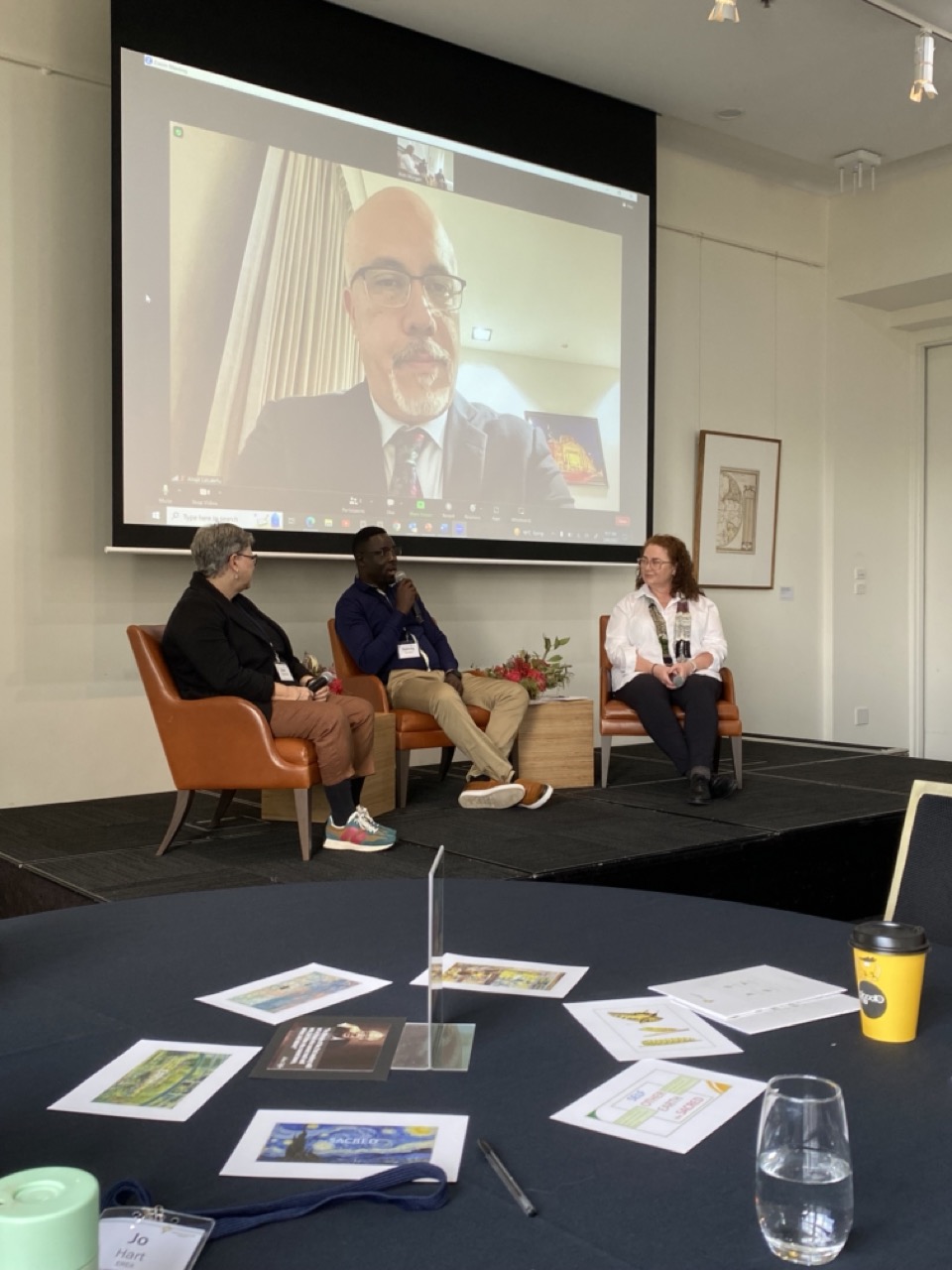
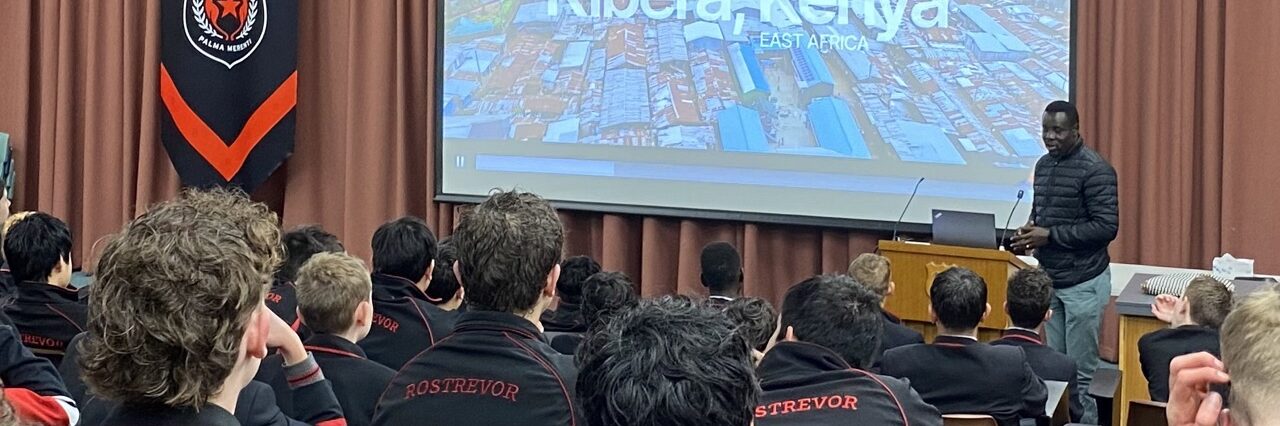
Tommy Nyawir and I visited all six states over the course of his seven-week tour of Australia. We engaged with 19 schools, educational settings, and associated organisations across the Edmund Rice network. Our aim was to communicate about the impact of the work of Edmund Rice Foundation Australia (ERFA), and partner organisation Mirror of Hope (Nairobi, Kenya). I didn’t always have my click counter with me, but I am confident we spoke directly to over 11,000 Australians; mostly students – classrooms, year levels, and whole-of-school assemblies. We also delivered teacher training sessions, spoke with parents, and other sector stakeholders. I am now able to reflect on this process, comfortable in the knowledge that Tommy is safely back with his family and colleagues in Nairobi.
There are challenges in communicating the impact of Australian support for international development and aid. Tackling topics like sustainable development, poverty, and marginalised communities – although worthy – can sometimes fall slightly short of fascinating. There is sometimes disassociation with a context that is literally on the other side of the world. Sometimes indifference is an issue, or even ignorance. Sometimes the issue facing the listener is empathy fatigue, in the face of what can at times seem like a relentlessly complex and troubled world.
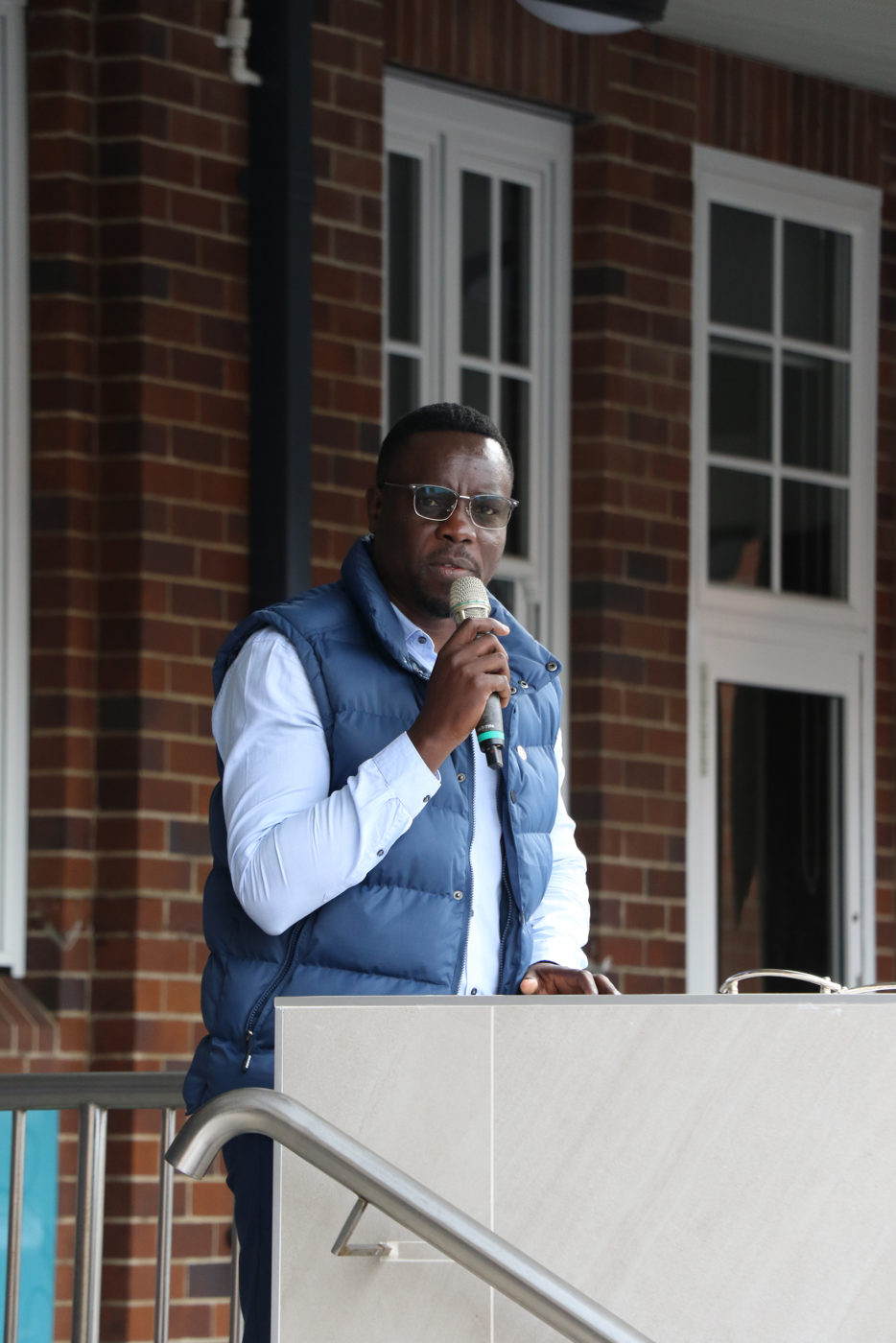
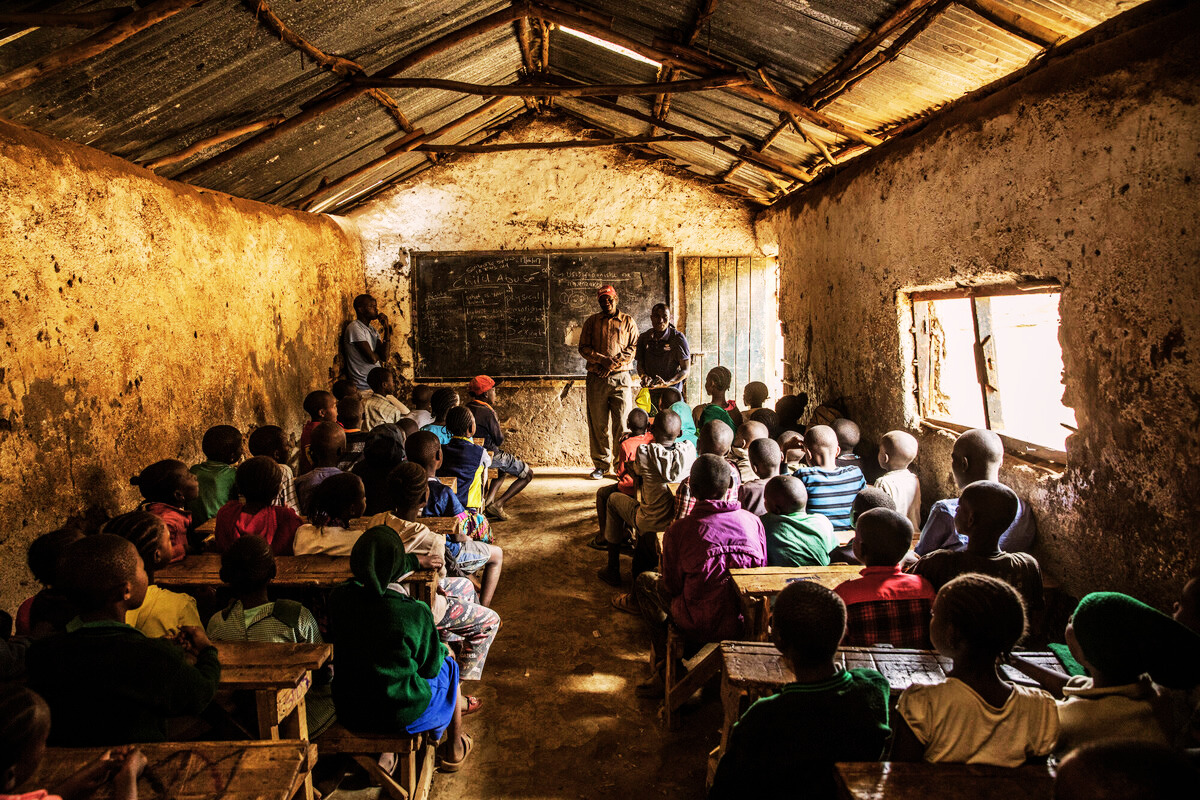
Tommy however was able to talk with absolute authority and integrity about these topics, for this is his story. Tommy grew up in one of the thousands of three by three metre shanties that form the community of Kibera, the largest urban slum in Africa – three square kilometres of desperate poverty and home to up to 1 million people. His life-story is fascinating and elevating – a contemporary tale of overcoming adversity, and embracing presence, compassion, and liberation. Tommy’s story does capture the audience and inspire a vital sense of hope; I should know, I’ve heard it at least 30 times. I also had ample opportunity, sitting around in airports and rental cars with my captive audience, to ask follow-up questions.
A central element of Tommy’s story, and one that seems to resonate strongly, involves his chance childhood encounter with a stranger – an older white man, wandering the Kibera slum by himself.
“Muzungu, muzungu, how are you?” I heard this call myself walking through Kibera. Unlike the stranger from Tommy’s story, I was a muzungu (white person) accompanied by capable Kenyan colleagues, who were very familiar with Kibera. I can’t imagine I would ever be brave enough to walk through Kibera by myself. The stranger in Tommy’s story not only did this, but this direct encounter with extreme poverty moved him to give a gift to a chatty teenager. This gift would change the course of the boy’s life forever. Within 24 hours of this chance encounter the boy would hold a white envelope with enough cash to pay for his entire four years of secondary school.

)